
Incense in Ancient Egypt: Temple Smoke, Trade and the Making of Kyphi
While researching incense for House of Marafi, I found that ancient Egyptian fragrance is often presented with more certainty than the surviving evidence allows. Modern accounts tend to describe every resin as frankincense, reproduce a single “authentic” kyphi recipe, or treat temple incense, perfume and embalming materials as though they were interchangeable.
The evidence presents a more complicated history.
Incense was used in Egyptian temples, funerary ceremonies and some medical preparations. The ingredients came from Egypt and from surrounding trading regions. We know about these materials through temple inscriptions, papyri, tomb scenes, surviving incense equipment, archaeological residues and accounts written by Greek and Roman authors.
However, each type of evidence has limitations. Ancient plant names do not always correspond neatly with modern botanical names, and recipes recorded in the Ptolemaic period cannot automatically be applied to every period of Egyptian history.
Incense in Egyptian temple ritual
Egyptian temples were maintained as the earthly residences of the gods. Inside the sanctuary, priests carried out rituals on behalf of the king. The cult image was approached, purified, clothed, anointed and presented with food, drink and aromatic offerings.
Incense was part of this daily ritual activity. Temple reliefs show the king or a priest holding a long censer shaped rather like an extended arm. The burning resin was placed in a cup at the front. Some censers also had a small container in which additional grains or pellets could be carried.
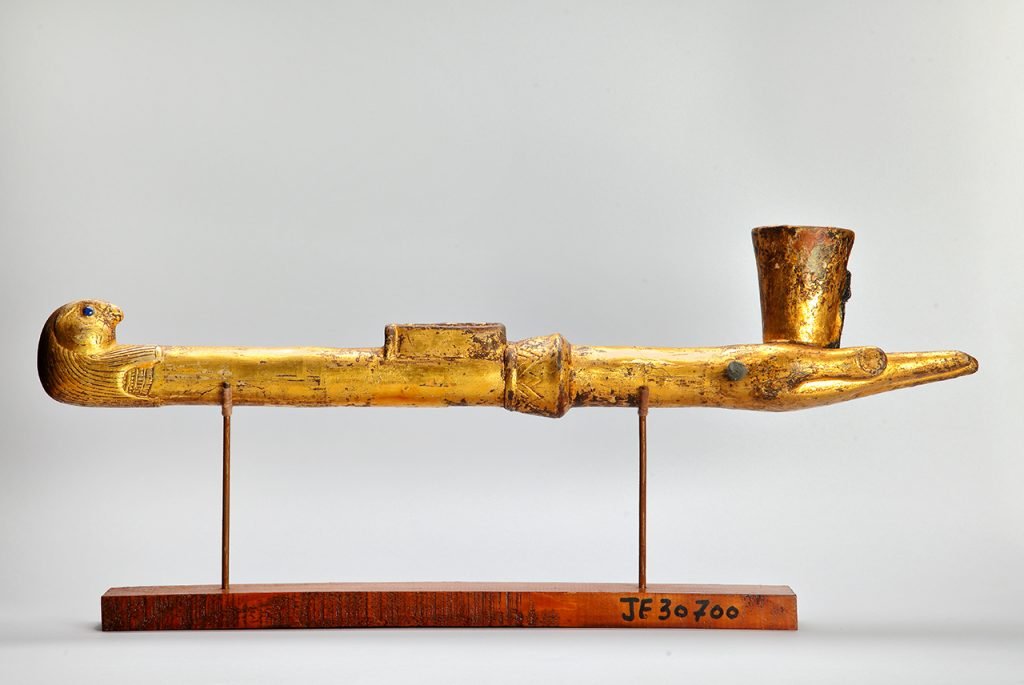
The smoke helped prepare and purify the ritual space. It was also an offering in its own right.
This use of incense should be understood within the Egyptian concern for purity. Temple service required washing, clean clothing and the removal of substances considered ritually unclean. Pleasant fragrance was associated with health, divine presence and order. Decay and offensive smells were associated with death and disorder.
Incense therefore had a practical sensory effect, but its importance was religious. The scent marked the temple as a space set apart for divine activity.
Richard H. Wilkinson discusses the structure and function of these temple rituals in The Complete Temples of Ancient Egypt. Egyptian offering practices are also examined by John Baines in Religion in Ancient Egypt: Gods, Myths, and Personal Practice.
What did the Egyptians burn?
The honest answer is that we cannot always identify it.
One of the most common Egyptian words associated with incense is transliterated as snṯr, often written as senetjer in English-language publications. It is regularly translated as “incense” and is frequently identified as frankincense.
But it may not have meant frankincense every time it was used.
Scholars have proposed that snṯr may sometimes have referred to frankincense, but it may also have described other aromatic resins, including resin obtained from pistacia trees. The meaning of the term may have varied by period, location or intended use.
Modern retailers rarely mention this uncertainty when they give ancient Egyptian ingredients familiar names. Translators working in the nineteenth and twentieth centuries were not making botanical identifications.
Egyptians had access to a wide range of fragrant materials. Depending on the period and preparation, these included myrrh, pistacia resin, conifer products, juniper, aromatic woods, reeds, oils, wine, honey and dried fruit. Some were burned separately. Others were ground, soaked or cooked together as compound incense.
Lise Manniche’s Sacred Luxuries remains a useful study of fragrance and cosmetics in ancient Egypt. The material evidence is considered in greater technical detail in Paul T. Nicholson and Ian Shaw’s Ancient Egyptian Materials and Technology.
Myrrh and the land of Punt
The most famous Egyptian record of the incense trade appears at the mortuary temple of Hatshepsut at Deir el-Bahri.
During the fifteenth century BCE, Hatshepsut sent an expedition to a place the Egyptians called Punt. The temple reliefs show ships, people, local buildings and the goods carried back to Egypt. These included ivory, ebony, gold and aromatic products.
The reliefs also show living myrrh trees being transported with their roots held in baskets.
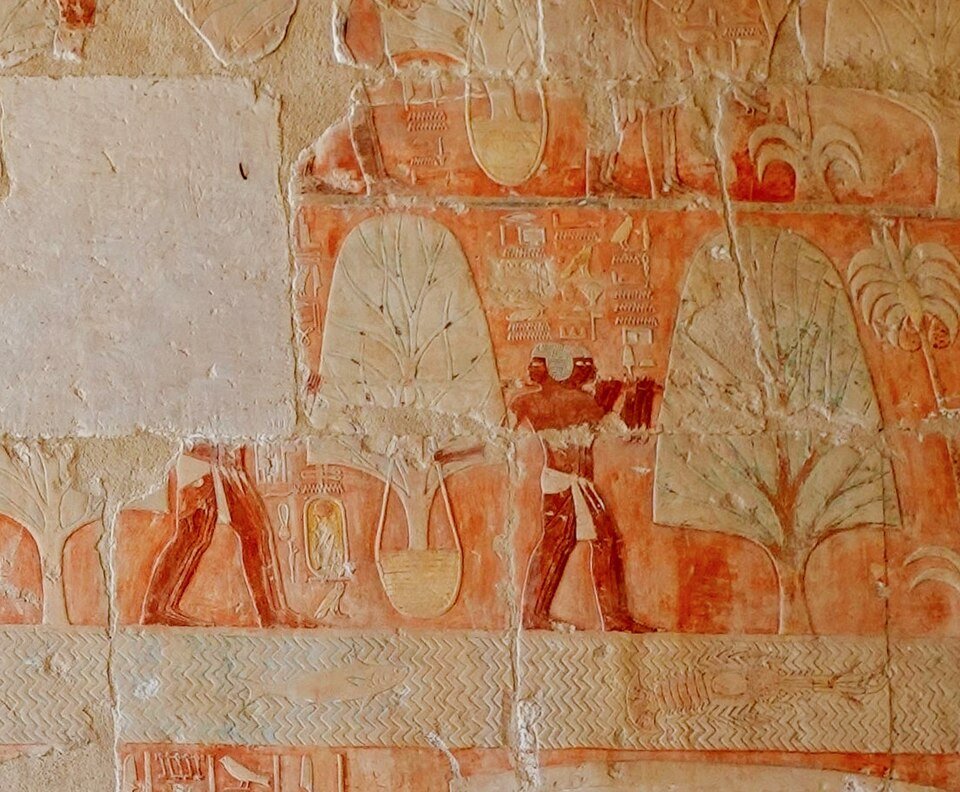
I found this detail to be significant. The Egyptians were not interested only in importing finished resin. They attempted to transport the trees that produced it. Hatshepsut’s inscriptions present this as a royal and religious achievement, particularly in connection with the god Amun.
The exact location of Punt remains debated. Most current discussions place it around the southern Red Sea and the Horn of Africa, possibly incorporating areas of modern Eritrea, Ethiopia, Djibouti, Somalia or Sudan. It may have referred to a trading region rather than a state with fixed borders.
The Punt expedition also shows the political value of incense. Imported resin demonstrated that the ruler could organise ships, personnel and long-distance exchange. Once brought to Egypt, the resin could be presented in a temple as a material gathered from a distant land for the use of the gods.
Kathryn Bard and Rodolfo Fattovich’s Harbor of the Pharaohs to the Land of Punt provides archaeological context for Egyptian activity on the Red Sea. The wider archaeological background is discussed in Bard’s An Introduction to the Archaeology of Ancient Egypt.
Kyphi was a manufactured incense
Kyphi is now the best-known incense associated with ancient Egypt. It is also one of the most frequently misrepresented.
The name comes through Greek from the Egyptian word kapet, which was associated with incense or fumigation. Kyphi was not a single raw resin. It was a compound preparation made from numerous ingredients.
Recipes were inscribed on the walls of Ptolemaic temples, including Edfu and Philae. Related preparations also appear in Egyptian medical texts. Later Greek writers, including Plutarch and Dioscorides, recorded their own descriptions.
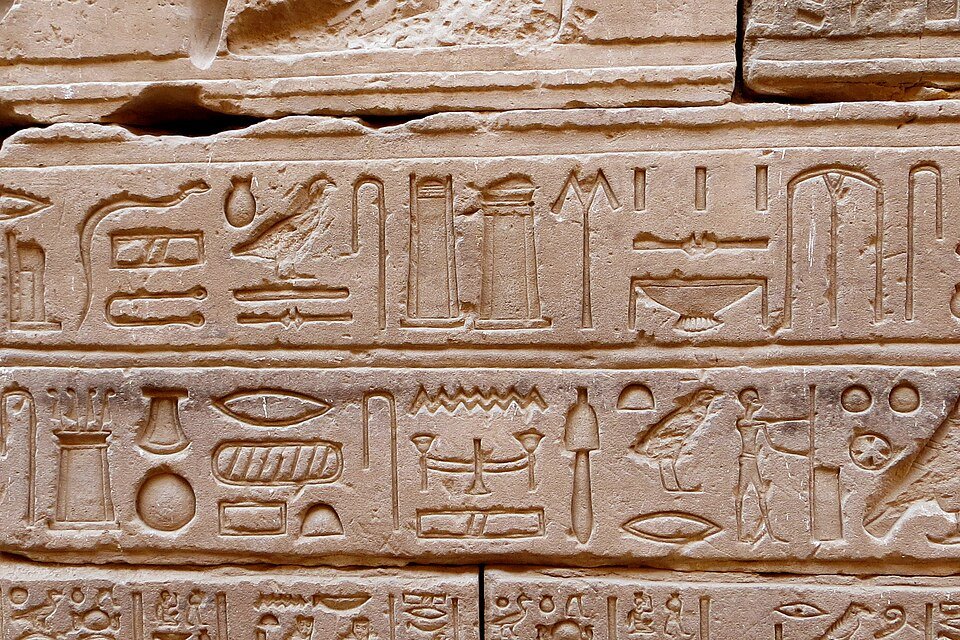
These sources do not preserve one identical formula. The number of ingredients varies, as do the names, quantities and preparation methods. Some substances remain difficult to identify.
Ingredients commonly proposed in translations include:
- raisins or a preparation made from dried fruit
- wine
- honey
- myrrh
- aromatic reeds or grasses
- juniper
- pistacia or related resin
- other gums, woods and plant materials
However, these ingredients were not just thrown into a bowl and burned. Temple recipes describe a manufacturing process involving measurement, grinding, soaking, heating and combination in a particular order. Some stages took several days.
Kyphi should therefore be understood as the product of specialist knowledge. Its manufacture depended on access to temple storerooms, imported materials, written formulas and trained workers.
Plutarch’s account of kyphi
One of the most frequently cited descriptions comes from the Greek writer Plutarch, who lived during the first and early second centuries CE.
In On Isis and Osiris, Plutarch states that Egyptian priests burned resin in the morning, myrrh at midday and kyphi in the evening. He describes kyphi as a compound of sixteen ingredients and associates it with relaxation and sleep.
His account is valuable, but its date must be kept in mind. Plutarch was writing during the Roman period, more than a thousand years after Hatshepsut’s reign and more than two thousand years after the beginning of dynastic Egypt.
His description provides evidence for the use and reputation of kyphi in his own historical setting. I would not treat it as proof that the same sixteen-ingredient preparation was burned every evening throughout the whole of ancient Egyptian history.
An English translation of Plutarch’s On Isis and Osiris is available through the University of Chicago’s LacusCurtius collection.
Incense, medicine and fumigation
Aromatic fumigations also occur in Egyptian medical texts. Depending on the remedy, smoke might be directed towards a patient or used within a room. Aromatic ingredients could also be incorporated into oils, ointments and preparations intended for the mouth or skin.
This does not mean that every medical preparation containing resin was incense. Burning, anointing, ingesting and embalming were different processes, even when some of the same ingredients appeared in more than one context.
Egyptian medicine also combined practical observation with religious and magical ideas. A remedy may have included a plant because of its physical effect, its smell, its symbolic association or a combination of these factors.
For this reason, historical recipes should not be presented as modern medical advice. Their importance lies in what they reveal about Egyptian ideas of the body, illness, purification and protection.
Aromatics in embalming
Aromatic materials were also used in the preparation of the dead. Embalmers worked with oils, waxes, fats, tars and resins to treat the body and its wrappings.
Recent chemical research has shown how complex these preparations could be.
A 2023 study published in Nature examined residues from vessels found in a Late Period embalming workshop at Saqqara. Researchers identified substances including cedar or juniper products, pistacia resin, elemi, dammar, beeswax, plant oils and animal fats. Some of these materials had travelled to Egypt through very long-distance trade.
The study also demonstrated why ancient ingredient names must be treated cautiously. Vessels labelled with the Egyptian term antiu, once widely translated as myrrh, contained a mixture of conifer-derived products and animal fat at this particular workshop.
This does not prove that antiu always meant the same mixture. It shows that a familiar translation may conceal a manufactured product rather than a single botanical ingredient.
The full research paper, “Biomolecular analyses enable new insights into ancient Egyptian embalming,” was published in Nature in 2023.
Incense and funerary ceremony
Incense was burned during ceremonies for the dead as well as being used in temples.
Funerary scenes show priests censing the deceased or the mummy. Incense also accompanied offerings made at tombs. As in temple ritual, the fragrant smoke purified the area and formed part of the relationship between the living, the dead and the divine world.
It is important to separate this burning of incense from the application of resins during embalming. A resin might be suitable for both purposes, but the method and ritual context were different.
A lump of resin placed on hot charcoal was an incense offering. Resin dissolved into an oil and applied to linen was an embalming material. Both could be fragrant without being the same product.
Imported fragrance and royal power
Many desirable aromatics did not grow naturally in the Nile Valley. They reached Egypt through exchange with the Levant, northeast Africa, Arabia and, in later periods, more distant trading networks.
Their value came partly from this distance.
Imported incense required ships, caravan routes, storage facilities and specialist knowledge. Temple supplies depended on administrators, merchants, sailors, resin collectors, craftspeople and priests. Incense was therefore part of the Egyptian economy as well as its religious life.
When a king presented imported resin to a god, the offering carried a political message. It showed that the ruler could obtain valuable materials from beyond Egypt’s borders and direct them towards the maintenance of the temples.
Reconstructing Egyptian incense today
It is possible to make an incense inspired by an Egyptian recipe. It is much harder to claim that the result is exactly what an Egyptian priest would have smelled.
Several problems stand in the way of an exact reconstruction:
- surviving recipes come from different periods and temples
- some ingredient names remain unidentified
- ancient units of measurement are not always straightforward
- plant species and growing conditions affect aroma
- preparation methods can change the scent of a material
- modern ingredients may be processed differently from ancient ones
A responsible reconstruction should identify the historical source on which it is based. It should also state where substitutions or disputed translations have been used.
For example, a maker might describe an incense as “based on the Ptolemaic kyphi formula recorded at Edfu.” That is more accurate than calling it “the original Egyptian kyphi recipe.”
There was no single unchanging incense formula used across three thousand years of Egyptian history.
My humble conclusion
The history of Egyptian incense cannot be reduced to frankincense, myrrh and a single kyphi recipe.
The evidence shows a developed culture of aromatic materials. Incense was burned in temples and funerary ceremonies. Resins and oils were used in medicine, perfumery and embalming. Imported materials connected Egypt with the Red Sea, the Horn of Africa, the Levant and wider trading networks.
The same evidence also requires caution. Ingredient names remain disputed, recipes changed over time and later writers do not necessarily describe earlier Egyptian practice.
The House of Marafi Experiment
Based on this research, I have chosen the following recipe as the starting point for my own experiment with Egyptian-style compound incense.
It is not presented as an exact reconstruction of ancient kyphi. The surviving formulas differ, several ingredient names remain disputed, and modern materials will not be identical to those used in an Egyptian temple. My recipe draws principally on the kyphi formulas recorded at Edfu and Philae, Plutarch’s later description in On Isis and Osiris, and modern scholarship on Egyptian aromatics.
My Experimental Kyphi Recipe
This is the first kyphi-style incense I intend to make for House of Marafi. It is based on the general structure of the temple recipes from Edfu and Philae, together with Plutarch’s later description of kyphi.
I have not attempted to include all sixteen ingredients mentioned by Plutarch. Several of the ancient names remain disputed, and some proposed materials are difficult to identify or unsuitable for casual home use. This version uses materials that can be obtained from reputable incense, herb and perfumery suppliers.
This is an experimental reconstruction, not an exact ancient Egyptian formula.
Test batch
This recipe should produce approximately 80 to 100 grams of finished incense, depending on how much moisture remains after drying.
Fruit and liquid base
- 30 g seedless raisins
- 30 g dry red wine
- 12 g raw honey
Resins
- 10 g myrrh resin
- 8 g frankincense resin
- 5 g mastic resin
- 3 g pine resin
Aromatic plants and spices
- 4 g dried juniper berries
- 3 g Ceylon cinnamon
- 2 g green cardamom seeds
- 3 g nagarmotha or cypriol root
- 2 g dried lemongrass
- 1 g spikenard root
The plant materials should be dried and weighed before grinding.
Why I selected these ingredients
Raisins, wine and honey
These appear in surviving descriptions of kyphi and form the body of the incense. The fruit and honey bind the powdered ingredients and produce a slow-smouldering material rather than a loose resin mixture.
Myrrh
Myrrh was one of Egypt’s most valued imported aromatics. It is strongly associated with the trade in products from Punt and appears in later descriptions of kyphi.
Frankincense
I am using frankincense as a practical interpretation of the aromatic incense resin mentioned in historical sources. This identification remains open to debate, particularly where the Egyptian term snṯr is concerned.
Mastic
Mastic provides a clean, bright resinous note. Pistacia products are archaeologically attested in Egyptian aromatic and embalming preparations, although this does not prove that modern mastic corresponds precisely to every ancient pistacia-based ingredient.
Pine resin
Coniferous products were used in ancient Egyptian preparations. I am including a small quantity to add depth without allowing it to dominate the mixture.
Juniper
Juniper appears in historical translations of kyphi formulas and is also supported by archaeological evidence for the Egyptian use of juniper products.
Cinnamon and cardamom
These spices appear in later kyphi traditions, although their place in earlier Egyptian formulas is less certain. I have included them in restrained quantities so the finished incense does not become a modern spice blend.
Nagarmotha
Nagarmotha, also sold as cypriol, provides an earthy, woody aroma. I am using it as a practical interpretation of the aromatic sedges or rhizomes mentioned in discussions of Egyptian incense.
Lemongrass
Lemongrass is not presented here as a confirmed ancient kyphi ingredient. I am using a small amount as an accessible substitute for an unidentified aromatic grass or reed.
Spikenard
Spikenard appears in later Mediterranean aromatic traditions and some reconstructions of kyphi. Its historical identification is not secure enough for me to describe it as essential, so I am using only a small amount.
Research basis
This experiment draws on the kyphi formulas recorded at Edfu and Philae, while recognising that the translation of several ingredients remains disputed. I also consulted Plutarch’s description in On Isis and Osiris, Lise Manniche’s Sacred Luxuries, and Paul T. Nicholson and Ian Shaw’s Ancient Egyptian Materials and Technology.
The selection of resins was also informed by the archaeological identification of pistacia, conifer and juniper products in Egyptian aromatic preparations. The 2023 Saqqara study published in Nature concerns embalming rather than kyphi, but it provides useful physical evidence for the range and complexity of resinous materials used in Egypt.
Sources and further reading
- Baines, John. “Society, Morality, and Religious Practice.” In Byron E. Shafer, ed., Religion in Ancient Egypt: Gods, Myths, and Personal Practice. Cornell University Press, 1991.
- Bard, Kathryn A. An Introduction to the Archaeology of Ancient Egypt. 2nd ed. Wiley Blackwell, 2015.
- Bard, Kathryn A., and Rodolfo Fattovich, eds. Harbor of the Pharaohs to the Land of Punt. University of Naples “L’Orientale,” 2007.
- Manniche, Lise. Sacred Luxuries: Fragrance, Aromatherapy, and Cosmetics in Ancient Egypt. Cornell University Press, 1999.
- Nicholson, Paul T., and Ian Shaw, eds. Ancient Egyptian Materials and Technology. Cambridge University Press, 2000.
- Rageot, Maxime, et al. “Biomolecular Analyses Enable New Insights into Ancient Egyptian Embalming.” Nature 614 (2023): 287–293.
- Shaw, Ian, ed. The Oxford History of Ancient Egypt. Oxford University Press, 2000.
- Wilkinson, Richard H. The Complete Temples of Ancient Egypt. Thames & Hudson, 2000.
- Digital Egypt for Universities, University College London.
- The British Museum Collection, including Egyptian ritual and funerary objects.
- The Metropolitan Museum of Art, Heilbrunn Timeline of Art History, including material on Egyptian religion, trade and funerary practice.